We Reviewed AI Calling Platforms for TCPA Compliance. Only One Passed.
Category: Security & Compliance | By: Sumit Khanna, founder of Voizematic | Published: | Updated: | Read time: 6 min read
TCPA compliance in AI calling depends on built-in screening, mandatory checks, and logged calling activity, not on loose promises.
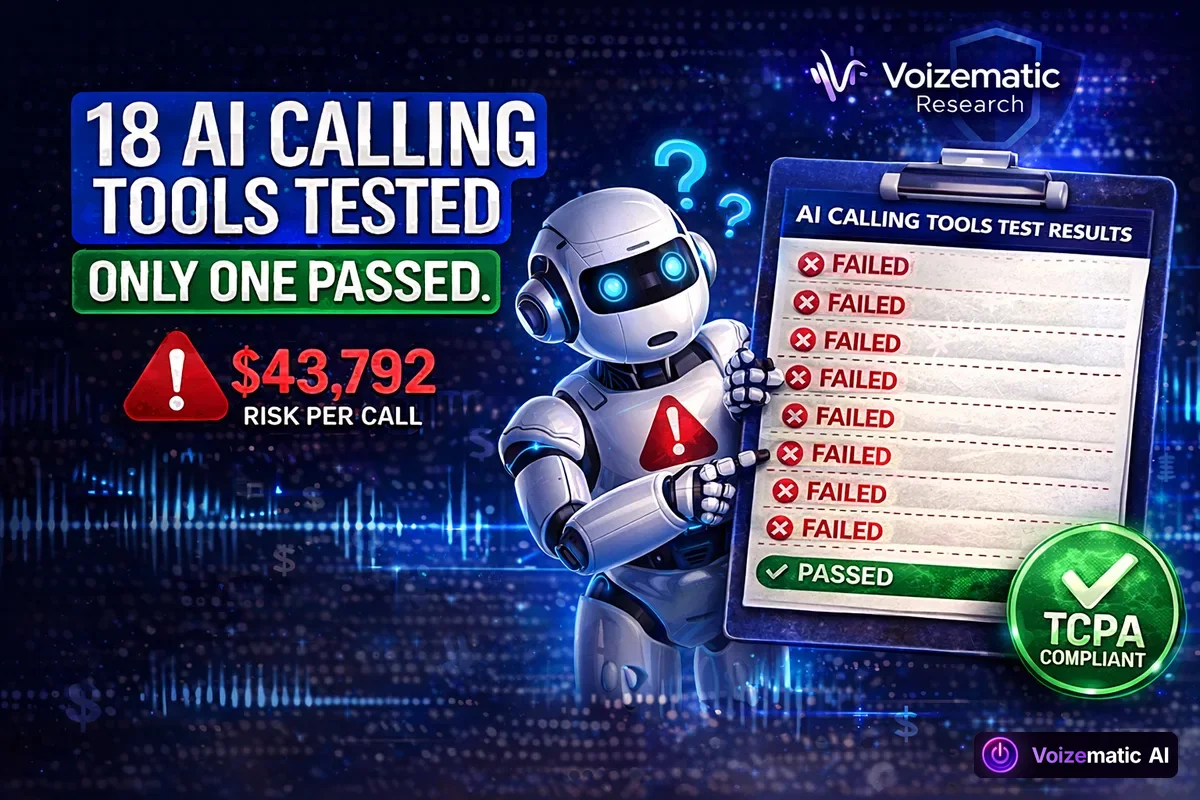
If you run outbound phone campaigns, TCPA compliance must be built into the calling platform, not left to manual checks. A compliant system should screen numbers before dialling, surface the right warnings, and keep a record of every call. Voizematic AI does this as part of the product.
What should a TCPA-compliant AI calling platform do?
At a minimum, the platform should help you stop unsafe calls before they start and keep a clear record of what happened after the call. In practice, that means:
- Screening outbound numbers before the dial goes out, including FTC and state DNC lists
- Flagging mobile numbers and other risky call types before launch
- Requiring a compliance step in the workflow so a campaign cannot be sent without review
- Logging every call for audit and follow-up
- Letting the team act on the call outcome, such as transfer to a human or next-step routing
These are not separate add-ons in Voizematic AI; they are part of how the platform runs outbound calling.
What platforms are in scope?
AI calling tools generally fall into a few groups: developer platforms, business phone tools with AI added on, and contact-centre systems. The important question is not the category. It is whether the platform gives you built-in controls before the call is made.
Voizematic AI supports both inbound and outbound calling, including bulk campaigns. It also has WhatsApp and Telegram agents alongside voice agents, so the same account can support different channels.
How does Voizematic AI handle compliance before an outbound call?
Voizematic runs TCPA and DNC screening before outbound dialling. It checks against FTC and state lists, so you are not waiting until after a campaign has gone out to find a bad number.
It also logs every call to Google Sheets, which makes the calling record easier to review and share internally. That matters because compliance is not only about blocking calls; it is also about being able to show what was attempted, what connected, and what action followed.
The platform also includes a Call Intelligence Engine. For each call, it captures sentiment, outcome, and next action. That gives the team a simple way to see what happened on the call and what should happen next.
What other compliance controls are built in?
Voizematic AI supports several controls that reduce manual work during outbound calling:
- 50+ languages with mid-call switching
- Per-caller conversation memory, so the agent can continue the same thread across calls
- Call transfer to a human when a live handover is needed
- Google Calendar booking during the call
- Gmail email sending during the call
These features matter because many compliance failures come from poor process, not only from bad intent. If the agent can switch language mid-call, remember prior context, and hand over to a human when required, the workflow stays more controlled.
Suppose a clinic calls back leads in English and Hindi. The agent can speak in either language, switch mid-call if the caller changes language, and book an appointment directly into the connected Google Calendar. If the caller asks for a human, the call can be transferred. The record is still logged, so the team can review the interaction later.
How is Voizematic priced for outbound calling?
Voizematic uses wallet-based billing, with pricing per connected minute and no monthly fee. The voice engine decides the rate.
Current pricing is:
- Standard AI Voice: ₹4/min ($0.05), falling to ₹3 as monthly volume grows
- Premium Real-Time AI: ₹9/min ($0.11) flat
- GST extra
Every new account receives ₹150 ($2) of free calling credit. Phone numbers rent for ₹199 ($2) per month.
This pricing model matters for outbound teams because you pay for usage, not per seat. If you are testing campaigns or scaling call volume up and down, that makes the cost structure easier to follow.
What should you look for before you launch a campaign?
If your AI calling tool is going to carry real outbound work, check for these practical points:
- Outbound screening before the call starts
- FTC and state DNC checks
- A mandatory compliance step in the campaign flow
- Call logging for review and record keeping
- Human transfer when the agent should not continue
- Support for the languages your callers actually use
Voizematic AI combines these controls with voice, WhatsApp, and Telegram agents, plus wallet-based per-minute billing. That makes it a usable option for teams that need both calling and compliance in one place.
So what is the answer?
If the question is whether an AI calling platform can help with TCPA compliance, the answer is yes, but only if the controls are built into the product. Voizematic AI does that with pre-dial DNC screening, compliance checks, call logging, and call intelligence, so the team is not left to patch the process together by hand.
About the author: Sumit Khanna is the founder of Voizematic and builds the platform's voice agents, telephony and billing. He publishes live call demos on the Voizematic YouTube channel.
About Voizematic: Voizematic is an AI voice agent platform that answers and places phone calls for businesses. Agents book Google Calendar appointments live during the call, send Gmail confirmations, run TCPA-compliant outbound campaigns and log every call to Google Sheets. Pricing is per connected minute — Standard from ₹4 ($0.05), Premium ₹9 ($0.11) — with no monthly fee.
← Back to Blog | See Pricing | Start free with ₹150 ($2) credit